Selling the Pump: Why Arab Institutional Investors Are Walking Away From American Oil and Gas Equities
For much of the past half-century, the logic appeared self-evident: Arab sovereign wealth funds and family offices, built on the revenues of hydrocarbon exports, would naturally gravitate toward US energy equities as a complementary holding. Oil wealth begetting oil investment. The symmetry was elegant, if somewhat circular.
That symmetry is now breaking down.
Across the Gulf Cooperation Council and beyond, institutional allocators are quietly but meaningfully reducing their exposure to American oil and gas stocks. The reallocation is not dramatic in any single quarter, but the direction is unmistakable — and the motivations behind it are more layered than a simple pivot toward environmental virtue.
The Paradox at the Heart of the Trade
The term "petrodollar paradox" captures the essential tension: nations that derive enormous wealth from fossil fuel production are increasingly reluctant to invest that wealth back into fossil fuel equities, particularly those listed on American exchanges.
This is not, as some observers have suggested, a case of Arab investors going green out of ideological conviction. The calculus is far more pragmatic. What has changed is the risk-adjusted return profile of US energy stocks relative to the alternatives now available — and the geopolitical environment in which those stocks operate.
US shale producers, which drove much of the excitement around American energy equities in the 2010s, are now in a more mature phase. Production growth has moderated, capital discipline has become a corporate mantra, and the once-reliable volatility premium that sophisticated investors could exploit has compressed. For large institutional allocators accustomed to deploying capital at scale, the opportunity cost of holding American oil and gas equities has risen considerably.
Regulatory Headwinds and the Washington Factor
Beyond the fundamentals, the regulatory environment in the United States has introduced a layer of uncertainty that Gulf-based allocators find increasingly difficult to price.
Federal permitting timelines for new drilling on public lands have lengthened. Environmental litigation targeting pipeline infrastructure has become a recurring feature of the investment landscape. And while the current political environment in Washington may appear more favorable to domestic energy production than its predecessor, the longer-term regulatory trajectory remains genuinely contested.
For investors with a five-to-fifteen-year time horizon — the standard planning window for most sovereign wealth vehicles — that contestation represents a structural risk rather than a cyclical one. Arab institutional allocators, accustomed to building positions with generational patience, are not inclined to absorb political risk that cannot be adequately hedged.
There is also the matter of secondary sanctions exposure. As geopolitical alignments continue to shift, some Gulf-based funds have grown more cautious about the optics and legal complexities of holding large positions in US energy companies that may intersect with sensitive geopolitical relationships.
Where the Capital Is Actually Going
The reallocation is not a retreat from energy as a sector — it is a repositioning within it.
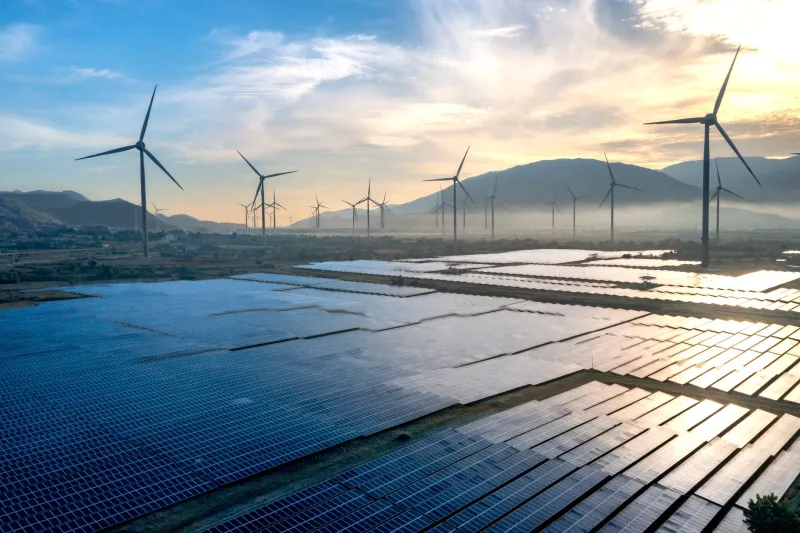
Renewable energy infrastructure in the United States has emerged as a primary destination for redirected Arab capital. Utility-scale solar projects across the Sun Belt, offshore wind developments along the Eastern Seaboard, and battery storage facilities tied to grid modernization programs are all attracting meaningful interest from Middle Eastern investors.
The appeal is structural. These assets generate long-duration, contracted cash flows — often backed by investment-grade off-takers or regulated utilities — that align well with the liability profiles of sovereign wealth funds and endowment-style family offices. They also benefit from the Inflation Reduction Act's extensive incentive framework, which has materially improved the economics of clean energy development in the US.
Several Gulf-based funds have also increased allocations to energy transition infrastructure more broadly: liquefied natural gas export terminals, carbon capture facilities, and hydrogen production projects. These assets occupy a middle ground — they are not purely renewable, but they represent the infrastructure backbone of a decarbonizing global economy, and they carry the kind of physical asset backing that Arab wealth managers have historically preferred.
The Sovereign Signal
Perhaps the most telling indicator of where this trend is heading comes from the sovereign wealth funds themselves.
Saudi Arabia's Public Investment Fund has been explicit about its ambitions in clean energy and technology infrastructure globally. Abu Dhabi's Mubadala Investment Company has deployed significant capital into renewable platforms across the US and Europe. Qatar Investment Authority has similarly expanded its clean energy footprint. These are not peripheral allocations — they are strategic pivots by some of the world's most consequential pools of capital.
For private Arab family offices and high-net-worth investors watching these sovereign moves, the signal is clear. The smart money from the Gulf is not abandoning energy; it is redefining what energy investment means in the current decade.
What This Means for American Energy Markets
The implications for US capital markets deserve attention. Arab institutional capital, while not the dominant force in American equity markets, has historically provided a stable, long-horizon bid for energy sector stocks. A sustained reduction in that demand — occurring alongside growing ESG-driven divestment from domestic institutional investors — could create a more volatile and less liquid market for certain segments of the US oil and gas equity universe.
For American energy companies seeking to attract and retain international capital, the message is uncomfortable but clear: the traditional marketing pitch to Gulf investors no longer lands the way it once did. The conversation has moved.
A Recalibrated Investment Thesis
For Arab investors navigating US markets, this moment calls for a deliberate reassessment of energy sector exposure. The question is no longer simply whether to hold American oil and gas equities, but whether those holdings represent the most efficient use of capital within an energy allocation — and whether the risk profile remains appropriate given evolving regulatory, geopolitical, and market dynamics.
The petrodollar, as a concept, was always about the recycling of energy revenues into productive financial assets. What is changing is the definition of "productive." For a growing number of Arab institutional allocators, productivity in the energy sector now means clean infrastructure, contracted cash flows, and positioning on the right side of a multi-decade transition.
The paradox, in the end, may resolve itself quite naturally: the wealth generated by hydrocarbons financing the infrastructure that gradually displaces them. That is not a contradiction — it is a strategy.