Certified and Profitable: How Arab Investors Are Turning Halal Consumer Markets Into a High-Return Asset Class
For years, the halal consumer sector occupied an awkward position in Western financial markets — too large to ignore, yet consistently underweighted by institutional allocators who lacked the cultural fluency to evaluate it properly. That gap is closing, and the investors closing it are predominantly Arab.
Across family offices in Dubai, sovereign-linked funds in Riyadh, and diaspora-backed private equity platforms in New York and London, a quiet but disciplined reallocation is underway. The target: halal-certified food manufacturers, beverage companies, cosmetics brands, and pharmaceutical producers serving Muslim and ethically conscious consumers across North America and Europe. The thesis is straightforward — demographics are destiny, and the numbers here are compellingly in favor of patient capital.
The Scale That Wall Street Keeps Underestimating
The global halal economy is currently valued at approximately $2 trillion, according to the State of the Global Islamic Economy Report, with projections placing it above $3 trillion by the end of the decade. In the United States alone, the Muslim consumer population — estimated at between 3.5 and 4.5 million individuals — represents purchasing power that exceeds $100 billion annually. Critically, this demographic skews young, is growing faster than the general population, and demonstrates notably strong brand loyalty toward certified products.
Yet despite this scale, dedicated institutional capital targeting halal supply chains has remained sparse in mainstream American private equity circles. The sector has historically been served by small regional players, undercapitalized brands, and scattered halal certification bodies operating without coordinated financial backing. That structural inefficiency is precisely where Arab investors see opportunity.
"When you understand the consumer from the inside, you recognize that halal certification is not a restriction — it is a quality signal," explains one Gulf-based family office principal with active food and beverage holdings across the American Midwest. "Mainstream investors are finally beginning to understand what we have known for decades."
The Investment Thesis in Practice
Arab institutional capital entering the halal supply chain is not making a single concentrated bet. The approach is notably diversified across subsectors, geographies, and stages of the corporate lifecycle.
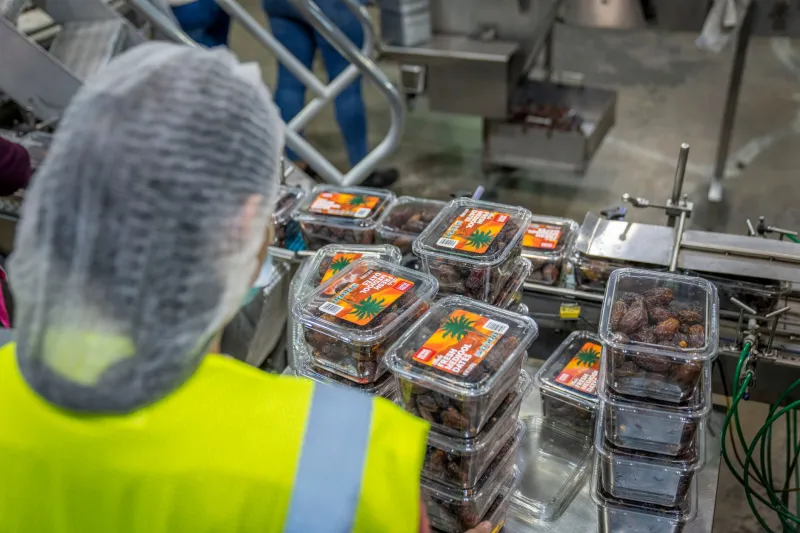
In food and beverage, the focus has been on acquiring or taking minority stakes in established manufacturers that are either already certified or capable of achieving certification within 12 to 18 months. Meat processing facilities in Texas and the Midwest, specialty food brands with national distribution, and private-label suppliers to major grocery chains have all attracted Arab-backed capital in recent years. The logic is partly arbitrage: companies producing to halal standards often simultaneously qualify for kosher certification, effectively doubling the addressable market without proportional increases in cost.
Cosmetics and personal care represent a faster-growing opportunity. The halal beauty market, which excludes alcohol-based formulations and animal-derived ingredients not slaughtered according to Islamic guidelines, is expanding at double-digit annual rates in the United States. Arab family offices with consumer goods expertise have been seeding and scaling brands targeting both Muslim consumers and the broader clean-beauty segment — a positioning strategy that allows halal-certified products to compete effectively in mainstream retail channels including Whole Foods, Target, and Ulta Beauty.
Pharmaceuticals and nutraceuticals present the most technically complex opportunity, but also some of the most defensible margins. Gelatin capsules, for instance, are typically derived from porcine sources — rendering the majority of standard supplement products non-compliant for observant Muslim consumers. Companies developing halal-certified capsule alternatives, plant-based excipients, and compliant drug delivery systems have attracted meaningful attention from Arab investors who recognize the regulatory moat that certification creates in this space.
Why Mainstream PE Is Finally Paying Attention
For much of the past two decades, large American private equity firms viewed halal consumer investments as too specialized to justify dedicated coverage. That calculus is shifting, driven by three converging pressures.
First, demographic data from the Pew Research Center and others has made the growth trajectory of the Muslim American population impossible to dismiss in consumer-facing investment theses. Second, the ESG movement has created a receptive mainstream audience for ethically positioned consumer brands — and halal certification, with its emphasis on animal welfare, ingredient transparency, and supply chain traceability, maps cleanly onto ESG screening criteria. Third, and perhaps most practically, several halal-adjacent portfolio companies have posted exit multiples that have caught the attention of generalist fund managers.
Some of the most successful exits in the specialty food sector over the past five years have involved brands that were either halal-certified or positioned for dual halal-kosher compliance. The returns have been sufficient to prompt dedicated coverage from at least three major middle-market PE firms that previously had no formal halal sector focus.
Arab investors, however, retain structural advantages that will not be easily replicated. Deep familiarity with certification standards across different schools of Islamic jurisprudence — Hanafi, Shafi'i, and Maliki interpretations of halal compliance differ in meaningful ways that affect supply chain design — provides Arab-backed capital with a due diligence capability that generalist funds are years away from developing organically.
Certification as Competitive Moat
One dimension of the halal investment thesis that tends to be underappreciated by outside observers is the role of certification itself as a durable competitive advantage. Obtaining and maintaining halal certification from recognized bodies — whether the Islamic Food and Nutrition Council of America (IFANCA), the Islamic Services of America (ISA), or internationally recognized equivalents — requires ongoing supply chain auditing, ingredient sourcing discipline, and facility management protocols that represent a genuine barrier to entry.
For portfolio companies that have successfully navigated this process, the certification becomes a defensible differentiator that is difficult for undercapitalized competitors to replicate quickly. Arab investors who understand the certification landscape are thus able to identify companies where compliance infrastructure already represents embedded value — value that is frequently not reflected in standard financial due diligence.
Positioning for the Decade Ahead
The most sophisticated Arab capital currently deployed in this sector is not simply buying exposure to existing demand. It is anticipating the next phase of halal market development: private-label programs with major national retailers, integration into institutional food service channels such as hospital networks and university dining programs, and export-oriented production targeting the Gulf Cooperation Council markets from American manufacturing bases.
Each of these directions represents a distinct return profile and risk structure. Retail private-label programs offer volume and stability; institutional food service provides contracted revenue with lower margin volatility; GCC export plays leverage preferential trade relationships and Arab investor networks in ways that purely domestic competitors cannot easily access.
The halal supply chain is no longer a niche footnote. For Arab investors who recognized its potential before mainstream capital arrived, it is becoming one of the more compelling return stories in the consumer sector — built not on speculation, but on the durable foundation of demographic reality and cultural conviction.