After the Petrodollar: How Arab Institutional Wealth Is Rebuilding Its Currency Architecture From the Ground Up
For the better part of five decades, the petrodollar system functioned like an invisible conveyor belt. Oil flowed out of the Gulf, dollars flowed in, and those dollars were recycled into US Treasuries, American real estate, and Western financial assets. It was a closed loop that suited everyone involved — and it made Arab sovereign wealth funds among the most dollar-concentrated institutional investors on earth.
That loop is opening. The fractures are not sudden or dramatic; they are structural, accumulating quietly beneath the surface of global finance. And Arab institutional investors who once treated dollar accumulation as a near-automatic consequence of energy revenues are now engaged in one of the most consequential portfolio redesigns in modern financial history.
The Architecture That Built a Generation of Wealth
To understand what is changing, it helps to appreciate what the petrodollar system actually delivered. When the United States and Saudi Arabia cemented their oil-for-security arrangement in the early 1970s, it created a self-reinforcing cycle: oil exporters priced their product in dollars, accumulated dollar surpluses, and reinvested those surpluses into US assets. This arrangement gave Arab sovereign funds a natural home for capital that was both liquid and, for most of the late twentieth century, reliably appreciating.
The system also offered a form of geopolitical insurance. Dollar-denominated reserves kept Gulf states closely aligned with Washington's financial architecture, providing access to US capital markets, legal protections, and a degree of political leverage. For family offices managing multigenerational Arab wealth, the dollar was not merely a currency — it was a cornerstone of strategic positioning.
What Has Changed, and Why It Cannot Be Reversed
The forces now eroding this arrangement are not the product of any single policy decision. They are structural and mutually reinforcing.
First, the global energy market itself has diversified. The United States is now the world's largest oil producer, which means Washington's incentive to maintain the oil-dollar nexus has diminished precisely as other producers — many of them willing to settle trades in alternative currencies — have gained influence. Saudi Arabia's bilateral oil trade discussions with China, conducted partly in yuan, represent not merely a diplomatic signal but a concrete reconfiguration of settlement infrastructure.
Second, the dollar's share of global foreign exchange reserves has declined steadily over the past two decades, from roughly 71 percent in 2000 to below 59 percent today, according to IMF data. This is not a collapse, but it is a directional trend that sophisticated Arab wealth managers cannot ignore when stress-testing portfolios against a 20-year horizon.
Third, and perhaps most consequentially, the weaponization of dollar-denominated systems — most visibly the freezing of Russian central bank assets following the 2022 Ukraine invasion — has prompted a fundamental reassessment among sovereign wealth managers worldwide. If dollar reserves can be rendered inaccessible through executive action, the risk calculus for holding concentrated dollar positions changes materially.
The Pivot: Where Arab Institutional Capital Is Moving
The response from Arab institutional investors has been measured rather than reactive, but it is unmistakable across several asset classes.
Alternative Reserve Currencies. Gulf sovereign funds have accelerated allocations to euro-denominated instruments, Japanese yen assets, and — more selectively — Chinese renminbi exposure. The renminbi allocation is notable precisely because it carries its own political complexity; Arab wealth managers are not embracing Beijing's currency as a replacement for the dollar, but rather as a partial hedge against dollar concentration. Swiss franc-denominated bonds and Singaporean assets have also attracted interest as neutral, high-quality alternatives.
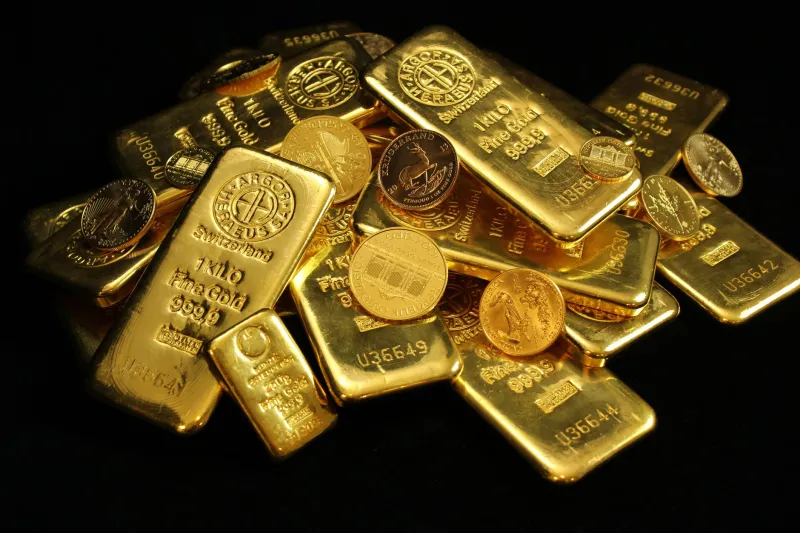
Commodity-Backed and Real Asset Exposure. Gold has re-emerged as a meaningful reserve asset among Arab sovereign funds, reversing a decades-long trend of underweighting the metal. The logic is straightforward: gold carries no counterparty risk, cannot be frozen by a foreign government, and has historically preserved purchasing power across currency regime transitions. Beyond gold, Arab institutional capital is flowing into agricultural land, water infrastructure, and industrial commodity positions — assets whose value is denominated in real terms rather than any single sovereign currency.
Emerging Market Instruments. Arab family offices and sovereign vehicles are expanding into emerging market local-currency bonds, particularly in Southeast Asia and Sub-Saharan Africa, where demographic growth and commodity endowments create a structural case for long-term appreciation. These positions are not without risk — currency volatility and governance concerns are real — but they represent a deliberate move toward a more multipolar reserve composition.
Digital Asset Infrastructure. A smaller but growing cohort of Arab institutional investors is exploring blockchain-based settlement systems and central bank digital currencies as potential components of a post-petrodollar financial infrastructure. The Abu Dhabi and Dubai financial ecosystems have positioned themselves as early regulatory frameworks for this experimentation, and family offices with longer time horizons are watching closely.
The Strategic Calculus for US-Based Arab Investors
For Arab investors with significant US exposure — and that includes a substantial portion of the community managing wealth from American cities — the petrodollar transition creates a nuanced strategic environment.
On one hand, the US remains the world's deepest and most liquid capital market. American equities, real estate, and private credit markets continue to offer returns and legal protections that few alternatives can match at scale. The dollar's decline as a reserve currency does not translate into a decline in US asset quality — these are distinct questions.
On the other hand, the era of treating dollar accumulation as a passive, automatic outcome of energy revenues is over. Arab investors who once allowed currency composition to drift toward dollar concentration by default must now make active, deliberate decisions about reserve diversification. This requires more sophisticated treasury management, more nuanced currency overlay strategies, and a willingness to accept short-term complexity in exchange for long-term resilience.
Wealth managers serving Arab-American clients are increasingly building currency diversification into standard portfolio construction rather than treating it as an exotic add-on. The conversation has shifted from whether to diversify away from dollar concentration to how much, how fast, and through which instruments.
Managing the Transition Without Abandoning the Opportunity
The most effective Arab institutional investors are not treating the petrodollar transition as a crisis to be survived but as a structural shift to be navigated with precision. The goal is not to exit the dollar — that would be both impractical and strategically unwise given the depth of US markets — but to ensure that no single currency regime failure can materially impair multigenerational purchasing power.
This means building portfolios that can perform across multiple currency scenarios: a world where the dollar retains dominance, a world where it shares reserve status with two or three alternatives, and a world where commodity-backed or digital settlement systems play a larger role than today's conventional wisdom suggests.
The petrodollar era generated extraordinary wealth for Arab investors. The era that follows need not be less prosperous — but it will demand a more active, more architecturally sophisticated approach to the question that the old system answered automatically: where, exactly, does value live when the currency that once defined it begins to share the stage?