Two Bets, One Strategy: How Arab Investors Are Profiting From Dollar Decline While Doubling Down on American Markets
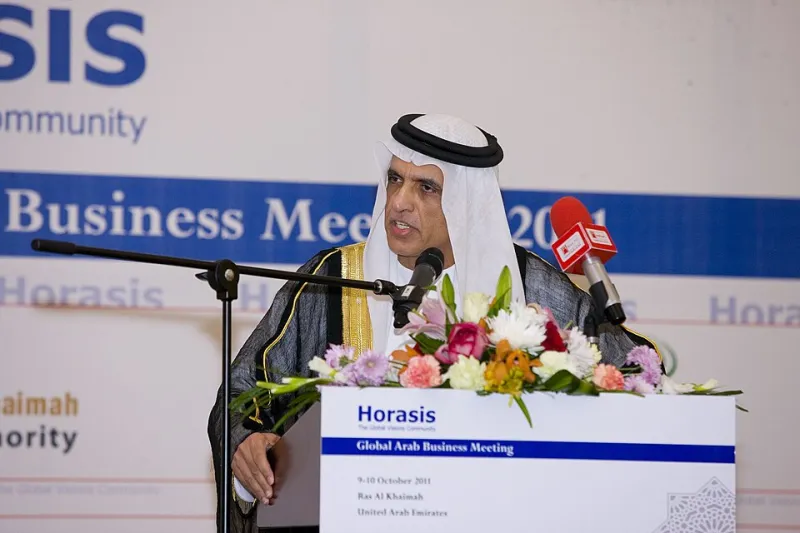
Photo: Richter Frank-Jurgen, CC BY-SA 2.0, via Wikimedia Commons
At first glance, the positioning of major Arab institutional investors appears to send conflicting signals. On one hand, Gulf sovereign wealth funds have been quietly diversifying their reserve holdings, engaging in yuan-denominated oil settlements, and participating in multilateral frameworks designed to reduce reliance on the US dollar as the world's default transaction currency. On the other, those same institutions have been expanding — not contracting — their allocations to American equities, commercial real estate, and Treasury instruments.
This is not confusion. It is architecture.
The most sophisticated pools of Arab capital have drawn a precise and deliberate line between two separate questions: whether the dollar will retain its singular dominance as a global reserve currency, and whether American assets remain among the most attractive investment destinations on the planet. Their answer to the first question is increasingly skeptical. Their answer to the second remains, for now, a resounding yes.
The Case Against Dollar Hegemony — and Why It Doesn't Mean What You Think
The de-dollarization conversation has accelerated meaningfully since 2022, when Western sanctions froze a significant portion of Russia's foreign exchange reserves. For Arab investors — many of whom manage sovereign wealth accumulated through dollar-denominated oil revenues — that episode served as a pointed reminder that currency concentration carries geopolitical risk, not merely financial risk.
Saudi Arabia's reported discussions around pricing a portion of its Chinese oil exports in yuan, the UAE's participation in the mBridge cross-border digital currency pilot, and the broader BRICS push toward alternative settlement mechanisms all reflect a structural recalibration that goes well beyond short-term hedging. These are long-horizon institutional decisions made at the highest levels of Gulf economic policy.
Yet framing this as a wholesale retreat from the dollar fundamentally misreads the strategy. Arab sovereign funds are not liquidating dollar assets. They are reducing the concentration of dollar-denominated reserves — the idle cash and near-cash holdings used for liquidity and geopolitical leverage — while preserving, and in many cases growing, their exposure to dollar-denominated investments. The distinction matters enormously.
Why US Assets Remain Structurally Attractive
The United States continues to offer a combination of market depth, legal transparency, and asset diversity that no alternative financial ecosystem can currently replicate at scale. For an investor deploying tens of billions of dollars, that matters more than almost any macroeconomic variable.
American equity markets remain the most liquid and institutionally sophisticated in the world. The S&P 500 provides exposure to global revenue streams — roughly 40 percent of earnings for large-cap US companies are generated outside the United States — meaning that even a weakening dollar does not necessarily erode the fundamental value proposition of holding American equities. In fact, dollar depreciation can enhance the returns of foreign investors holding US assets when those gains are converted back into stronger domestic currencies.
US commercial real estate, despite recent pressures in the office sector, continues to attract significant Gulf capital into logistics, multifamily residential, and data center assets — sectors with structural tailwinds that transcend currency cycles. And US Treasuries, for all the de-dollarization rhetoric, remain the world's preeminent safe-haven instrument precisely because no comparable alternative yet exists.
Arab institutional investors understand this. Their continued allocation to American markets is not inertia. It is a deliberate assessment that US asset quality justifies dollar exposure at the investment level, even as dollar concentration at the reserve level deserves reduction.
The Hedge Is Built Into the Structure
What emerges from this dual positioning is a layered hedging strategy that operates across multiple timeframes simultaneously.
In the near term, diversifying reserve currencies — holding euros, yuan, gold, and SDR-linked instruments alongside dollars — provides a buffer against the kind of geopolitical shock that could weaponize dollar access. This is insurance against tail risk, not a forecast of imminent dollar collapse.
Over the medium term, maintaining robust US asset allocations ensures participation in American economic growth, technology leadership, and capital market returns. If the dollar weakens gradually — a scenario many currency strategists consider plausible over a five-to-ten-year horizon — the real assets and equity positions held by Arab investors in the United States retain intrinsic value largely independent of the exchange rate at which they were acquired.
Over the long term, the strategy positions Arab wealth to benefit regardless of which monetary order ultimately prevails. If the dollar retains dominance, US asset holdings generate strong returns. If a more multipolar currency system emerges, diversified reserve holdings provide resilience and optionality.
This is not a contradiction. It is a portfolio designed to win under multiple scenarios.
What Private Arab Investors Can Learn From Sovereign Strategy
The institutional logic applied by Gulf sovereign wealth funds translates meaningfully to the strategies of high-net-worth Arab investors and family offices operating in the United States.
First, it reinforces the importance of distinguishing between currency risk and asset risk. Holding US real estate, for instance, provides inflation protection, rental income, and long-term capital appreciation that are largely independent of where the dollar trades against the dirham or riyal in any given quarter.
Second, it validates the role of hard assets — commodities, real assets, and tangible investments — as a structural component of any portfolio navigating monetary uncertainty. Gold, in particular, has seen renewed interest from Arab institutional investors precisely because it sits outside the dollar system while retaining universal store-of-value status.
Third, and perhaps most importantly, it underscores the value of geopolitical literacy in investment decision-making. Arab investors, by virtue of their regional context, often have an earlier and more nuanced read on shifts in global monetary order than their Western counterparts. That informational edge, applied systematically, is a genuine source of alpha.
Navigating the Paradox With Precision
The petrodollar system — the arrangement through which oil revenues are recycled into dollar-denominated assets — has been the defining feature of Arab financial engagement with the global economy for half a century. Its evolution is not a crisis. It is a maturation.
Arab investors who understand this transition clearly are not choosing between American markets and a post-dollar world. They are building portfolios that acknowledge the possibility of both, and positioning themselves to benefit from the journey between the two.
For Arab wealth builders operating in or through the United States, the strategic imperative is the same: hold quality American assets with conviction, while ensuring that dollar concentration at the liquidity layer does not become a source of uncompensated risk. The most sophisticated capital in the Gulf has already arrived at this conclusion. The question for private investors is how quickly they can follow.