Hard Assets, Harder Convictions: Why Arab Wealth Managers Are Positioning Ahead of the Next Inflation Wave
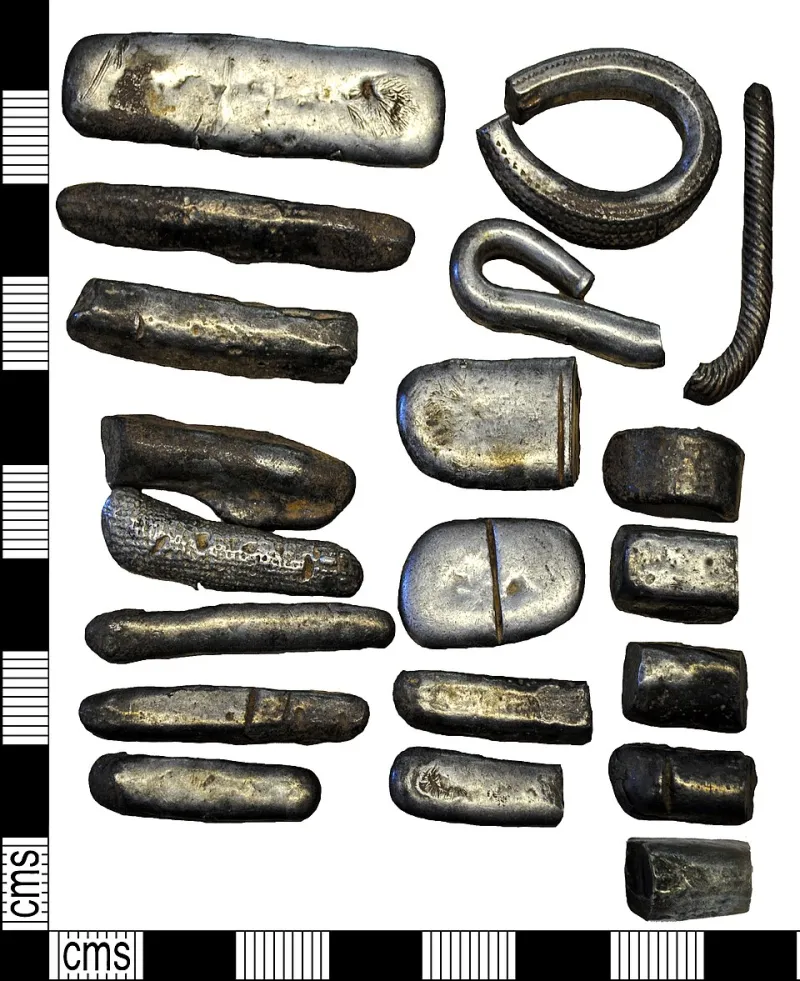
Photo: The Portable Antiquities Scheme, Stuart Noon, 2015-04-13 10:18:59, CC BY 2.0, via Wikimedia Commons
There is a particular kind of institutional memory that shapes how investors from the Arab world think about inflation. It is not theoretical. For families whose wealth was built in economies where currency devaluations arrived without warning, where oil price cycles rewrote national fortunes in a matter of months, and where the purchasing power of savings could be halved by forces entirely outside domestic control, inflation is not an abstract macroeconomic variable. It is a lived experience encoded into investment philosophy.
This context is essential for understanding why a growing cohort of Arab investors — both those based in the United States and those directing capital from Gulf financial centers — has been rotating into tangible, inflation-resistant assets with a conviction and timing that precedes the broader repositioning now becoming visible across mainstream American portfolios.
The Federal Reserve's Credibility Problem and What It Signals
The Federal Reserve's aggressive rate-hiking cycle between 2022 and 2024 succeeded in bringing headline inflation down from its post-pandemic peak. But among the wealth managers and family office advisors who serve Arab and Middle Eastern clients in the United States, the prevailing view is that the structural conditions that generated that inflation — fiscal expansion, supply chain fragmentation, energy transition costs, and geopolitical realignment — have not been resolved. They have been temporarily suppressed.
This is a meaningful distinction. When central bank credibility is tested and found contingent rather than absolute, investors with long institutional memories begin shifting their allocation frameworks. Paper assets whose returns depend on stable purchasing power become less attractive. Assets with intrinsic value, finite supply, or productive capacity tied to real-world demand become more so.
The rotation now underway among Arab wealth managers is not a panic response. It is a deliberate, forward-looking repositioning based on a framework that has been stress-tested across multiple economic cycles in markets where monetary policy was far less predictable than it has historically been in the United States.
Farmland: The Quiet Accumulation Nobody Is Talking About
Of all the inflation-hedging asset classes gaining traction in this community, American farmland may be the most counterintuitive to outside observers — and the most strategically sound on closer examination.
Farmland has delivered consistent, inflation-adjusted returns over multiple decades. According to data from the NCREIF Farmland Index, the asset class has outperformed the S&P 500 on a risk-adjusted basis over rolling twenty-year periods while exhibiting dramatically lower volatility. It produces income through crop revenues or lease arrangements, it appreciates with commodity prices and land scarcity, and it carries an intrinsic utility that no monetary policy decision can erode.
For Arab investors accustomed to thinking about food security as a strategic national priority — a perspective shaped by the Gulf states' significant investments in agricultural land across Africa, Central Asia, and South America — US farmland represents a familiar logic applied to a stable, rule-of-law jurisdiction. Several family offices with roots in the Gulf have quietly built meaningful positions in Midwestern and Central Valley agricultural land over the past three years, often through vehicles that allow fractional ownership without the operational complexity of direct farm management.
Precious Metals: Gold's Enduring Role in the Arab Investment Tradition
Gold occupies a unique position in the Arab investment psyche. Across the Middle East and North Africa, gold has served for centuries as a store of value, a hedge against political instability, and a transferable asset that crosses borders without requiring institutional intermediaries. The modern Arab investor who maintains a gold allocation is not engaging in nostalgia. They are applying a risk management framework with a track record that predates modern financial markets by millennia.
In the current environment, that framework is being validated. Gold has reclaimed and surpassed all-time highs in nominal dollar terms as of 2024, driven by a combination of central bank accumulation — led in part by Gulf sovereign funds — de-dollarization trends, and persistent geopolitical uncertainty. Arab wealth managers who maintained or added to gold positions during the period of Fed rate hikes, when conventional wisdom suggested gold would underperform, have seen those convictions rewarded.
Beyond physical gold, this community has also shown increasing interest in silver, platinum group metals, and royalty-streaming companies that provide leveraged exposure to precious metal prices without the operational risks of direct mining investment.
Strategic Commodities: Reading the Energy Transition as an Inflation Signal
Perhaps nowhere is the Arab investor's informational edge more apparent than in the strategic commodity space. Investors with professional and familial connections to the Gulf energy sector understand — at a granular level — the supply-demand dynamics of oil, natural gas, copper, lithium, and the rare earth elements that underpin the global energy transition.
The consensus emerging from this network is that the transition away from fossil fuels, while directionally correct over a multi-decade horizon, will require enormous quantities of mined commodities whose production infrastructure is currently inadequate to meet projected demand. Copper, in particular, is being treated as a structural long position by several Arab family offices that see its centrality to electrification as an irreversible demand driver.
This is not a contrarian bet against clean energy. It is a recognition that the physical infrastructure of decarbonization is itself deeply commodity-intensive — and that investors who position accordingly before mainstream capital flows arrive will benefit disproportionately.
Building an Inflation-Resilient Portfolio: A Framework for Arab-American Investors
For Arab-American investors evaluating their own exposure to inflationary risk, the rotation described above offers a practical framework rather than a prescriptive formula. The specific allocations will vary based on liquidity needs, time horizon, and existing portfolio composition. But several principles apply broadly.
First, assess your real purchasing power exposure. A portfolio heavily weighted toward nominal fixed-income instruments — Treasury bonds, certificates of deposit, conventional money market funds — is structurally vulnerable to inflation resurgence. Even a moderate allocation to real assets can meaningfully reduce this vulnerability.
Second, consider the liquidity spectrum within tangible assets. Physical farmland and direct commodity holdings offer strong inflation protection but limited liquidity. Exchange-traded funds tracking commodity indices, real estate investment trusts with inflation-adjusted lease structures, and gold-backed instruments provide more liquid alternatives with comparable directional exposure.
Third, evaluate the geopolitical dimension of your commodity exposure. In an era of supply chain nationalism and resource competition, not all commodities are equally accessible or equally stable. The Arab investor's traditional familiarity with energy markets provides a natural starting point, but diversification across commodity categories reduces concentration risk.
What This Rotation Signals for Broader Markets
The movement of Arab and Gulf-connected capital into tangible assets is not occurring in isolation. It is part of a broader global shift in how sophisticated investors are reassessing the relationship between monetary policy, purchasing power, and long-term wealth preservation. When investors who have navigated currency crises, oil shocks, and regional instability begin rotating out of paper assets and into real ones, it is worth asking what they see that others do not.
The answer, in this case, appears to be a sober assessment that the conditions for sustained inflation have not been permanently resolved — merely deferred. And in the world of long-duration wealth management, the difference between deferral and resolution is everything.