Quiet Architects: How Arab Wealth Managers Are Building Currency Defenses While the Dollar Still Dominates
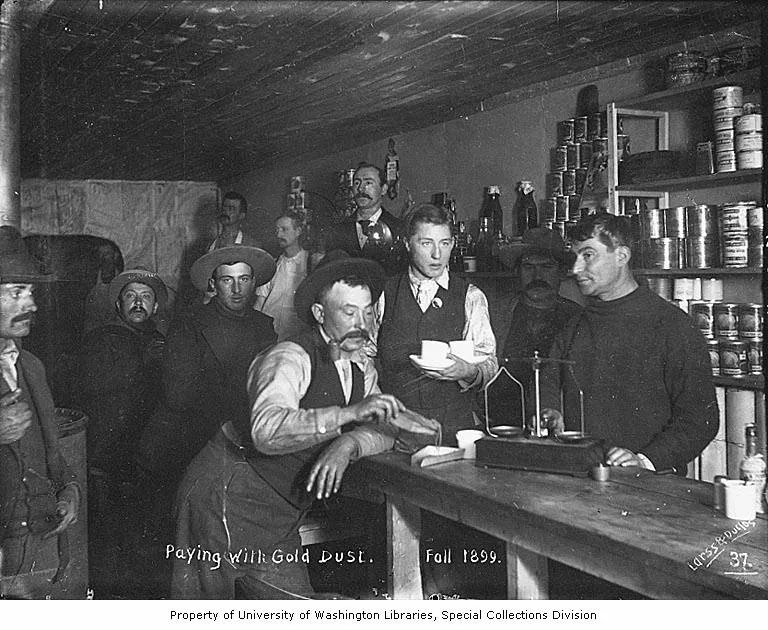
Photo: Larss & Duclos Studio, Public domain, via Wikimedia Commons
The dollar remains, by most measures, the undisputed anchor of global finance. It settles roughly 88 percent of all foreign exchange transactions. It denominates the majority of sovereign debt held by emerging markets. It funds oil contracts, aircraft leases, and semiconductor deals across six continents. And yet, in the portfolio rooms of Riyadh family offices, Abu Dhabi sovereign funds, and Beirut diaspora investment clubs operating out of New York and Houston, something has shifted. The conversation is no longer whether the dollar will weaken. It is how quickly, and how to be positioned before that answer becomes obvious to everyone else.
For Arab investors—many of whom have managed wealth across currencies for generations, navigating the collapse of the pound sterling's reserve status, the volatility of the petrodollar era, and the financial turbulence that followed the 2008 global crisis—this is not a radical thesis. It is a historical pattern playing out in slow motion. The sophistication lies not in predicting the exact inflection point, but in building structures that perform regardless of when it arrives.
The Geopolitical Signal Most Americans Are Missing
The de-dollarization narrative has been dismissed repeatedly by mainstream US financial media as the wishful thinking of adversarial states—Russia, China, Iran—seeking to undermine American economic primacy. That framing, while politically convenient, obscures a more complex reality that Arab institutional investors are tracking with considerable precision.
Since 2022, a meaningful portion of Gulf oil trade has begun to settle in non-dollar currencies, including the Chinese yuan and, in some bilateral arrangements, local currency swaps. Saudi Arabia's discussions with Beijing over yuan-denominated oil pricing, however inconclusive they have remained publicly, sent a signal that reverberated through sovereign wealth fund strategy rooms from Doha to Kuwait City. The message was not that the dollar was dying. It was that the architecture of dollar dependency was now negotiable in ways it had not been since Bretton Woods.
Arab wealth managers read that signal not as ideology but as optionality. If the pricing mechanisms of the commodity that originally gave the dollar its post-1973 structural advantage are beginning to diversify, then portfolios built on a single-currency assumption carry a risk that has not yet been priced by American markets.
The Three-Layer Hedge
The hedging frameworks being deployed by sophisticated Arab investors are not monolithic. They vary by institution size, risk tolerance, and time horizon. But a consistent architecture has emerged across conversations with wealth managers operating in both the Gulf and the US market.
Layer one: alternative reserve currency exposure. This means deliberate allocation to assets denominated in or correlated with currencies that stand to gain relative weight in a multipolar reserve system. The euro, Swiss franc, and Japanese yen remain foundational. But increasingly, the Chinese renminbi—accessed through offshore bond markets, Hong Kong-listed instruments, and structured products—is appearing in portfolios that would not have touched it five years ago. The allocation is rarely more than five to ten percent of total holdings, but its presence signals a directional conviction.
Layer two: commodity anchoring. Gold has re-emerged not as a speculative trade but as a structural reserve position. Several Gulf-linked family offices operating in the US have increased physical gold allocations—held through custodians in Switzerland and Singapore rather than US-based ETFs—specifically to reduce counterparty exposure to dollar-denominated financial infrastructure. Silver, platinum, and agricultural commodity positions are playing a secondary role, providing inflation sensitivity without the concentration risk of a single metal.
Layer three: selective digital asset exposure. This is the most contested layer, and the one most likely to surprise observers who associate Arab institutional capital with conservative positioning. A growing cohort of younger Arab wealth managers—many educated at American universities and operating at the intersection of Silicon Valley and Gulf capital—has allocated modest but real positions to Bitcoin as a non-sovereign store of value. The thesis is not speculative. It is structural: an asset with a fixed supply ceiling and no central bank backstop represents a form of currency risk insurance that no fiat hedge can fully replicate. These positions are typically held at one to three percent of total portfolio value, sized to survive volatility without threatening the broader mandate.
Maintaining the American Anchor
What distinguishes this strategy from simple dollar pessimism is its simultaneous commitment to US market exposure. Arab institutional capital has not retreated from American equities, real estate, or private markets. If anything, the logic of hedging has reinforced the case for maintaining robust US positions: if the dollar weakens gradually over a decade, US equities—priced in dollars but generating earnings from globally diversified revenue streams—become more attractive to non-dollar investors, not less.
The calculus is subtle but important. A weakening dollar does not mean American assets lose value in absolute terms. It means they become cheaper for investors holding stronger currencies, which tends to attract more foreign capital and support asset prices. Arab wealth managers who hold both the hedge and the underlying US exposure are positioning to benefit from the transition itself, not merely to survive it.
This dual positioning—hedging the currency while owning the assets—requires a degree of financial sophistication that is not yet common in American retail or even institutional circles. Most US-based portfolio managers are still operating on the assumption that dollar stability is a given, not a variable. That assumption has served them well for decades. Whether it will continue to do so is precisely the question that Arab investors are no longer willing to take on faith.
What the Timeline Actually Looks Like
Seasoned Arab wealth managers are careful to distinguish between a structural shift and an imminent crisis. The dollar's reserve status will not evaporate in a quarter or even a decade. The inertia built into global financial infrastructure—dollar-denominated debt markets, SWIFT settlement systems, US Treasury holdings by central banks worldwide—is enormous. Even the most aggressive de-dollarization scenarios project a gradual erosion of dollar dominance rather than a sudden collapse.
But gradual erosion, compounded over twenty or thirty years, is precisely the time horizon that multigenerational Arab family offices are managing against. For an investor whose wealth preservation mandate extends to the next two or three generations, a slow-moving structural shift in reserve currency dynamics is not a distant abstraction. It is a planning assumption that belongs in the investment policy statement today.
American investors, by contrast, tend to operate on shorter planning cycles—driven by quarterly reporting, annual performance benchmarks, and a financial media ecosystem that rewards near-term precision over long-term structural thinking. That temporal mismatch is, in the view of many Arab wealth managers, the single largest source of competitive advantage available to patient capital right now.
The Window Before Consensus
Every major monetary realignment in modern history has been preceded by a period during which the signals were visible to those paying attention and invisible to those who were not. The decline of sterling's reserve status was legible to informed observers years before it became consensus. The rise of the dollar itself was telegraphed by the industrial and financial trajectories of the early twentieth century long before Bretton Woods made it official.
The Arab investors building currency defenses today are not predicting catastrophe. They are reading a trajectory that is already in motion, and positioning accordingly—while the cost of that positioning remains relatively low, and while American markets still price the dollar as if its dominance is a law of nature rather than a historical condition.
For Arab wealth holders with assets on both sides of the Atlantic, that window represents one of the more compelling asymmetric opportunities of the current cycle. The question is not whether to hedge. It is whether to do so before or after the rest of the market figures out why.